

The crafts
Four crafts. Four places. One hand at a time.
Every House of Elki piece starts with a craft that belongs to a place and a community. Here is what each one is, how it is made and how to look after it.
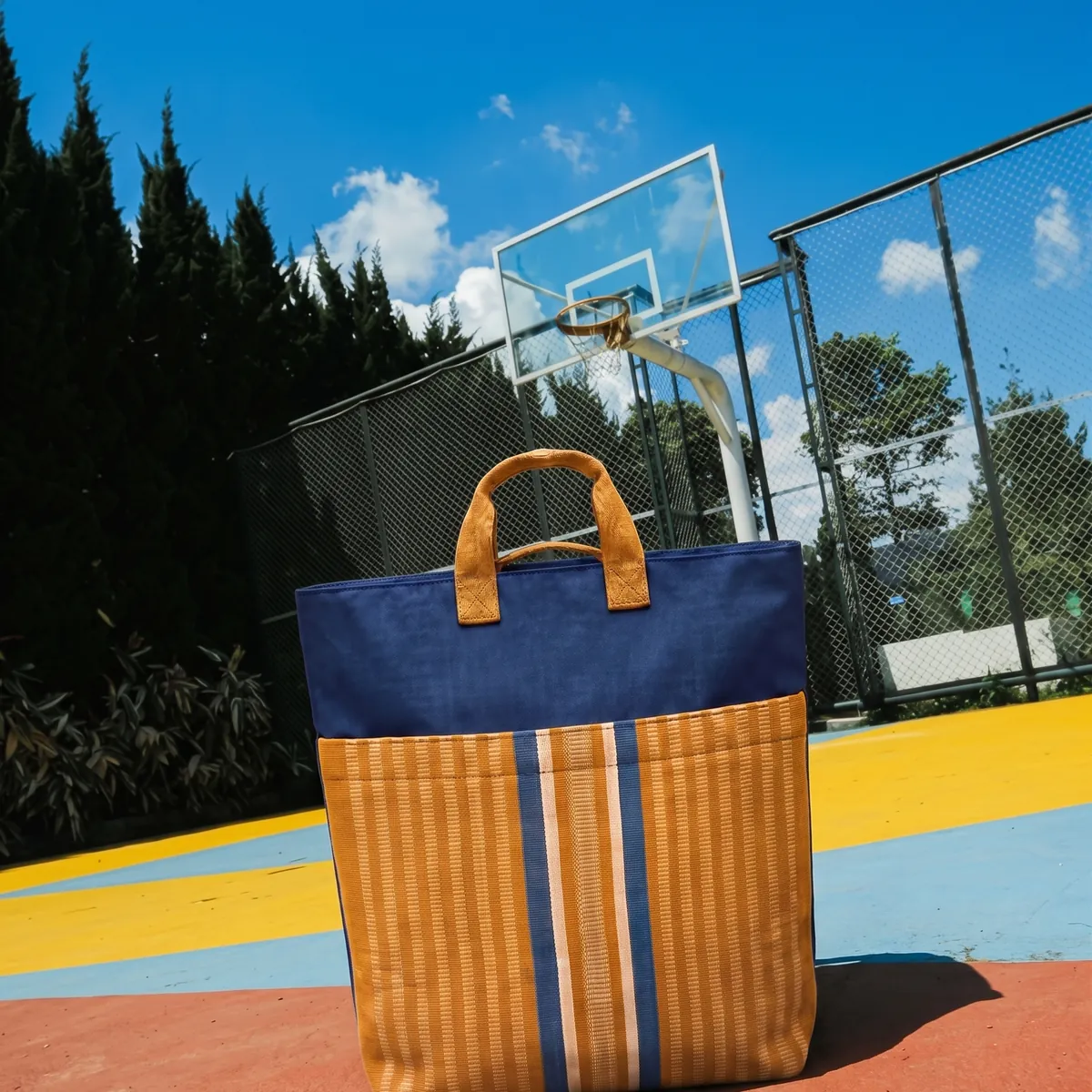
Kishanganj, Bihar
Dhokra jute weaving
A heritage weave of the Rajbanshi community, practised for more than four generations along the border region of Kishanganj. Traditionally it was woven only for weddings: a chatai, or mat, made by the women of the community for the bride and groom, never sold, and seven to ten days in the making.
How it is made
Raw jute is made into thread, a slow and careful step, then assembled, dyed and woven. The weave is warp-dominant, so the stripes and bands are built into the cloth on the loom rather than printed on it. The finished cloth is cut, lined and finished by hand into everyday pieces.
The patterns
The Rajbanshi name every pattern, such as Sikli and Makardaant. Weft bands and the zigzag border, the Kusiyaarpurni, come from the cluster’s own mats.
Living with it
Spot clean with a damp cloth and dry in the shade. Do not machine wash or bleach. Woven stripes vary slightly from piece to piece.
Shop dhokra jute pieces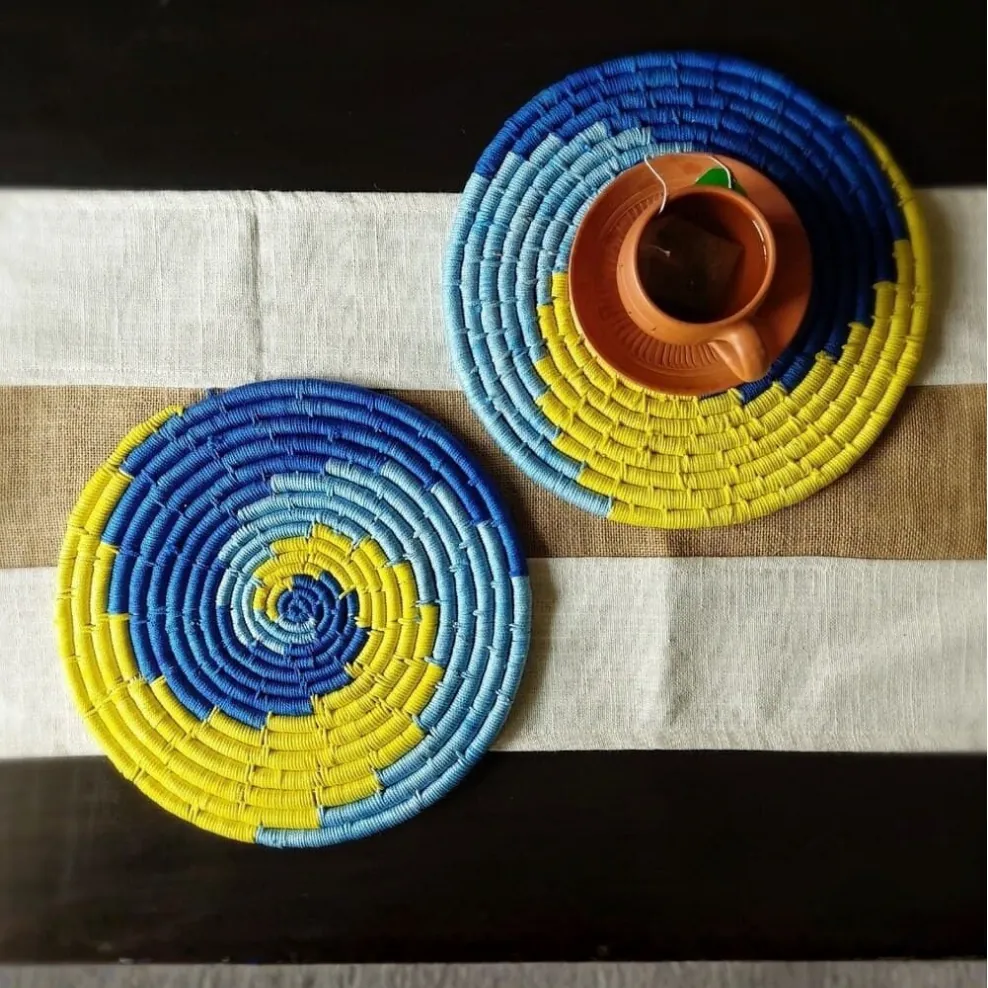
Mayurbhanj, Odisha
Sabai grass coiling
Sabai grass, with date palm leaf, is the basketry craft of Mayurbhanj. It is light, strong and entirely hand-shaped.
How it is made
The grass is cut, dried and twisted into rope by hand, then coiled round by round and bound with a wrapping stitch. Each round is shaped by hand, so the spiral shifts slightly from piece to piece. That variation is the signature of the work.
The patterns
Spirals, bands and the coil itself carry the cluster’s visual language, so every piece carries its place with it.
Living with it
Keep dry and away from direct sunlight and heat. Wipe with a dry or lightly damp cloth, and air-dry flat if it gets damp.
Shop sabai grass pieces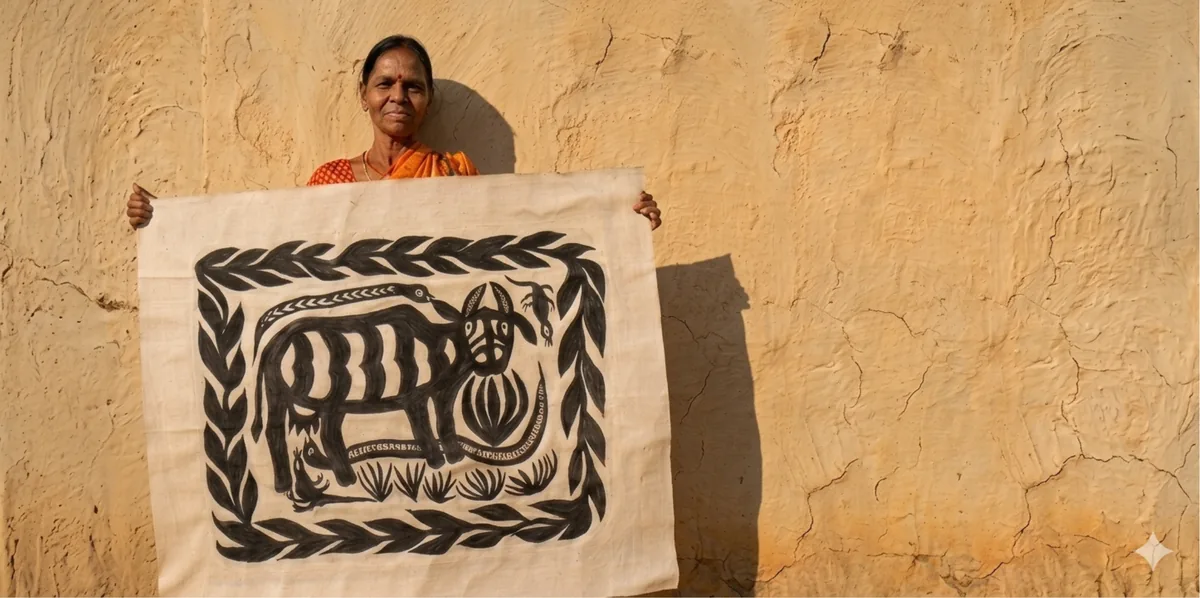
Hazaribagh, Jharkhand
Sohrai–Khovar painting
GI-registered (2020)
Sohrai–Khovar began as wall art, painted by women to welcome the harvest and mark the seasons. It is a GI-registered painting tradition of the Hazaribagh region.
How it is made
The women paint by hand in a limited palette of natural pigments. House of Elki pieces carry that hand-painted language onto objects used every day, from journals to desk mats.
The patterns
Animals, leaves and plant forms, with dots and rays drawn from the walls of village homes.
Living with it
Keep painted surfaces dry and away from direct heat. Wipe gently with a dry cloth.
Shop sohrai–khovar pieces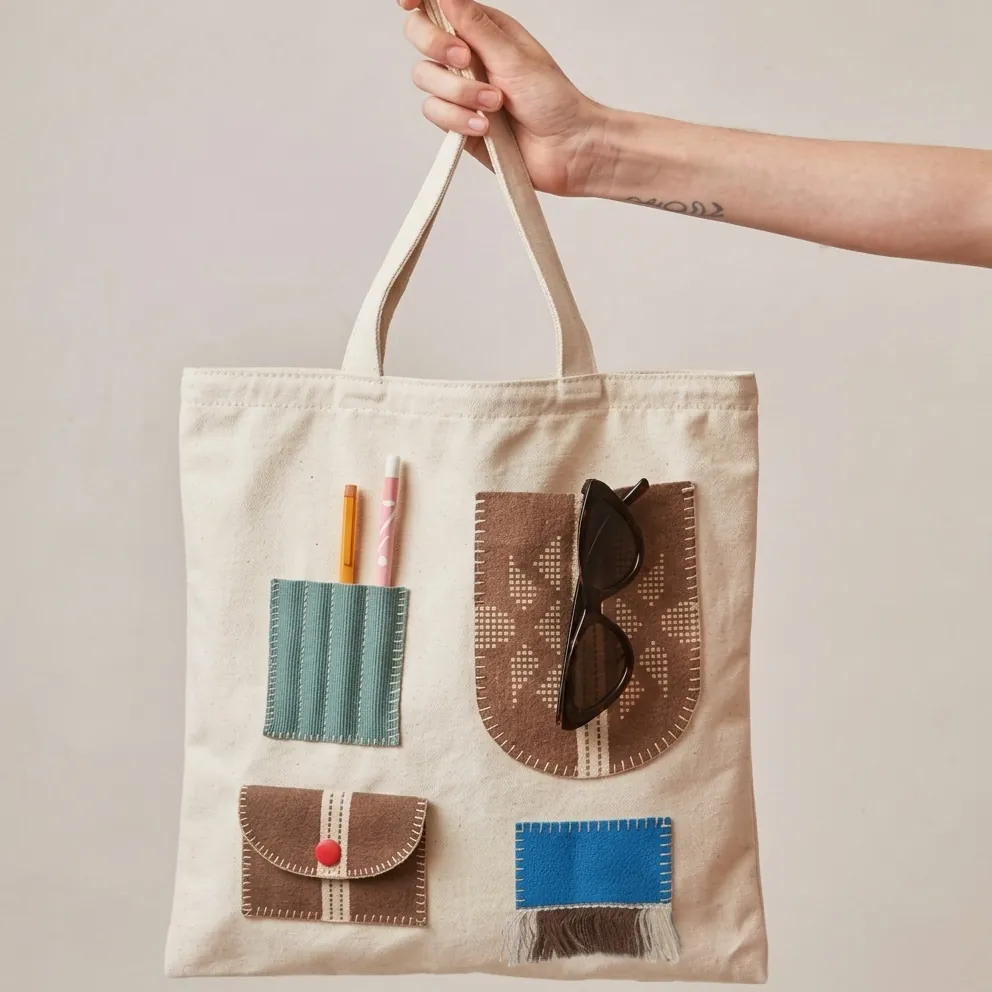
Rayagada, Odisha
Kapdaganda embroidery
GI-registered (January 2024)
Kapdaganda is the shawl embroidery of Dongria Kondh women in the hills of Rayagada, stitched by hand, line by line.
How it is made
It is sewn in running stitch, short and slightly irregular, so the hand that made it stays visible. The stitching is translated onto pieces you can carry every day: totes, pouches and luggage tags.
The patterns
Triangles stand for the Niyamgiri hills where the community lives, and diamonds for Niyamraja, the sacred mountain.
Living with it
Spot clean around the embroidery with a damp cloth. Do not machine wash. Keep leather trims away from water.
Shop kapdaganda piecesWhat does GI mean?
A Geographical Indication (GI) is legally protected origin status under Indian and international law, like Champagne or Scotch. Only registered producers from that region may use the craft’s name on their goods. Sohrai–Khovar and Kapdaganda are GI-registered; with PRADAN we are co-filing for Dhokra jute and Sabai, and co-filing GI Authorised User registrations so the right to the name stays with the women who practise the craft.