
How a Sabai grass basket is made, one coil at a time
Sabai grass is cut, dried and twisted into rope, then coiled and stitched into form in Mayurbhanj. Here is how a lidded basket comes together.
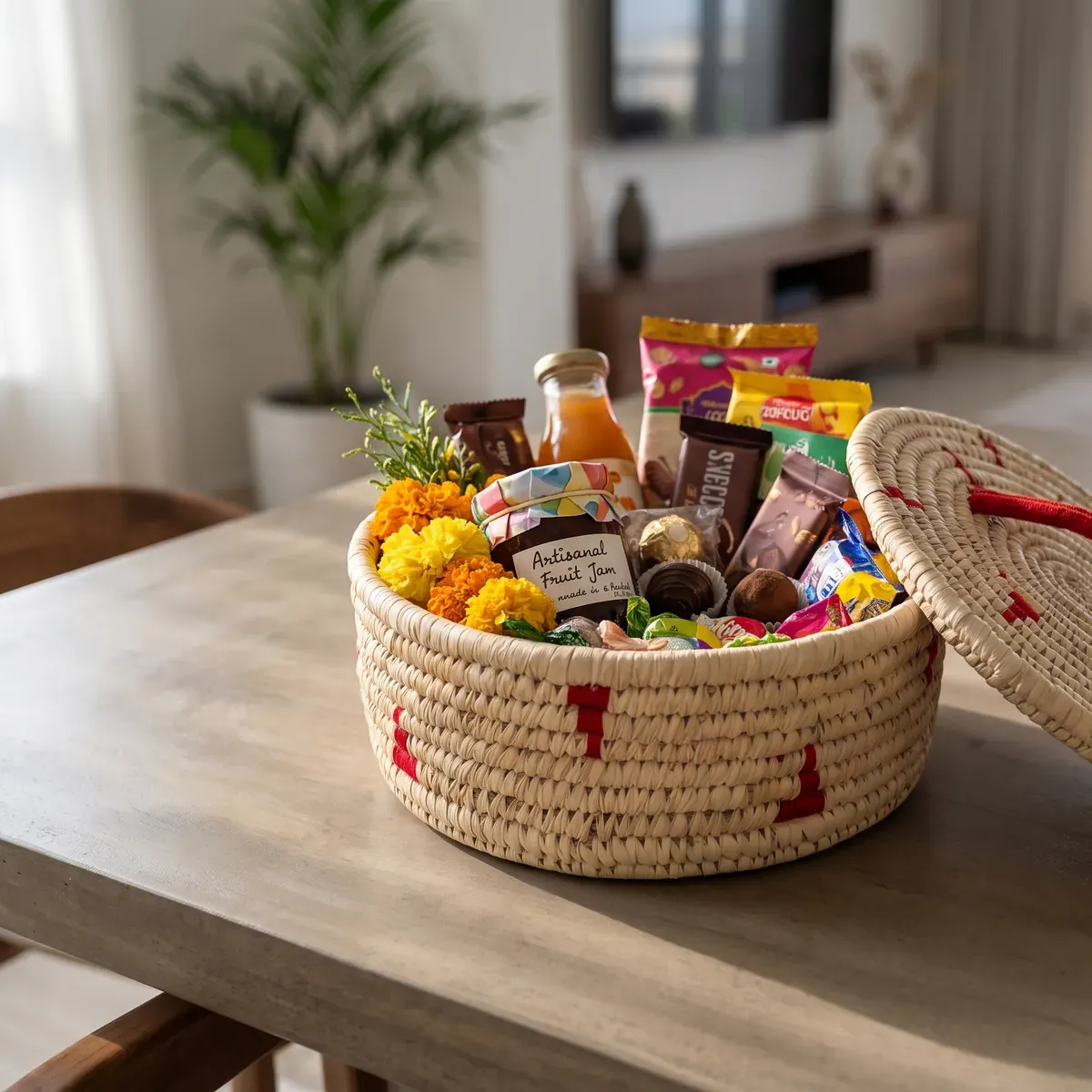
A Sabai grass basket starts as grass and ends as something firm enough to carry a gift. Nothing in between is done by machine. In Mayurbhanj, in Odisha, the grass is cut, dried, twisted into rope and then coiled and stitched into shape, one round at a time.
From grass to rope
Sabai grass is cut and dried in the sun. Then the artisans twist it by hand into a rope. The rope is the building block of everything made in this craft, from small coasters to storage baskets.
Coiling and stitching
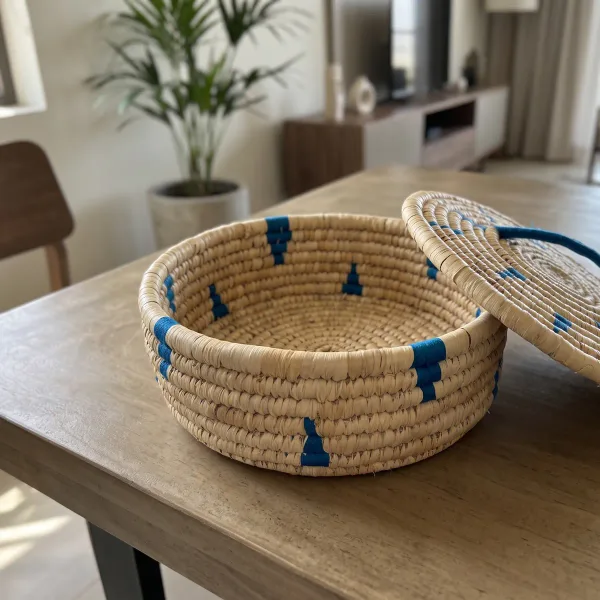
The rope is wound round and round, starting from the centre of the base. Each new round is bound to the one before it with a stitch, so the walls of the basket rise a coil at a time. Dyed thread is worked into the stitching, which is how the blue, red and teal patterns on our lidded baskets appear.
Patterns from Mayurbhanj
The patterns come from the cluster’s own visual language: spirals, rings and small stitched shapes that repeat around the basket. You can read more about the cluster and the other crafts we work with on our crafts page.
A basket that is more than packaging
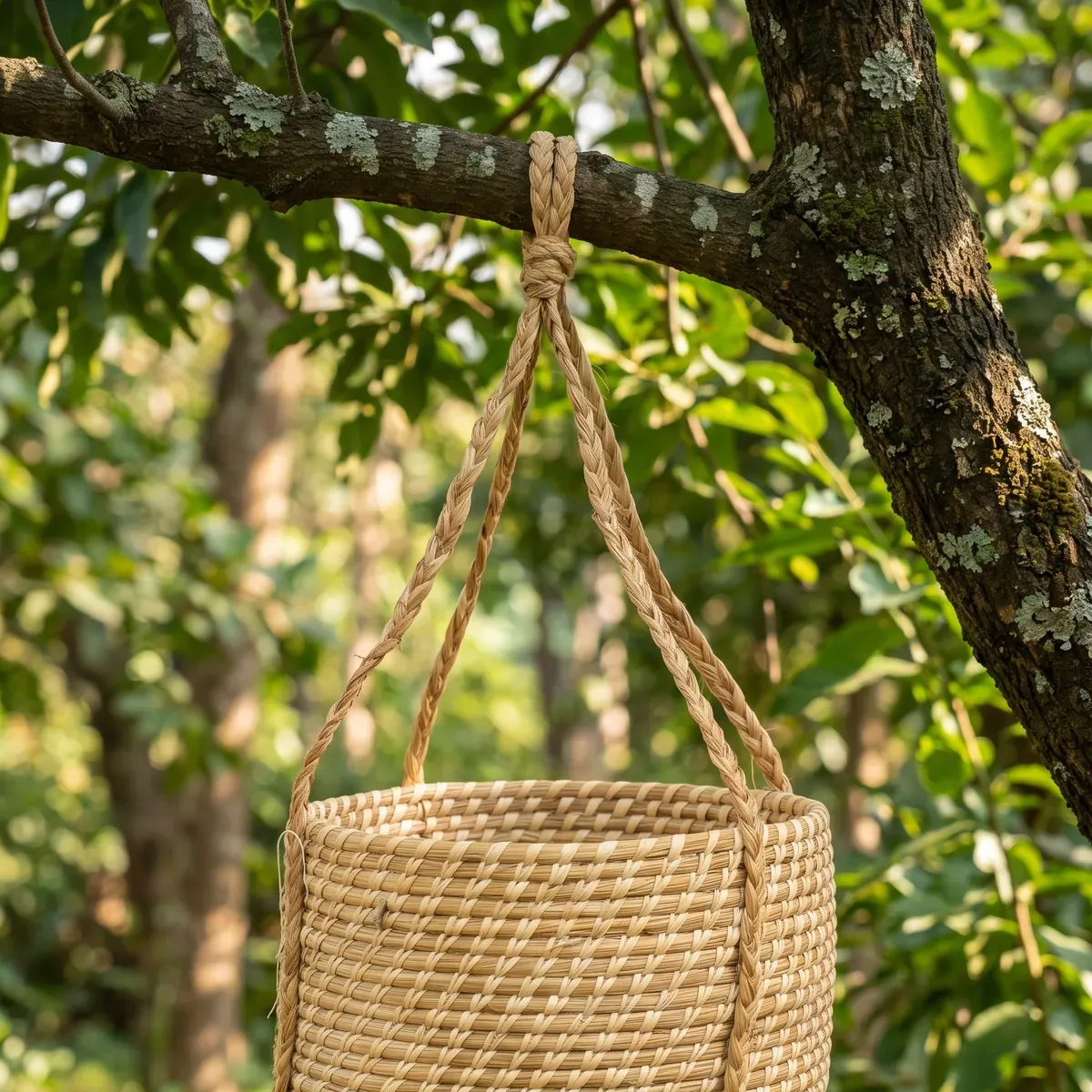
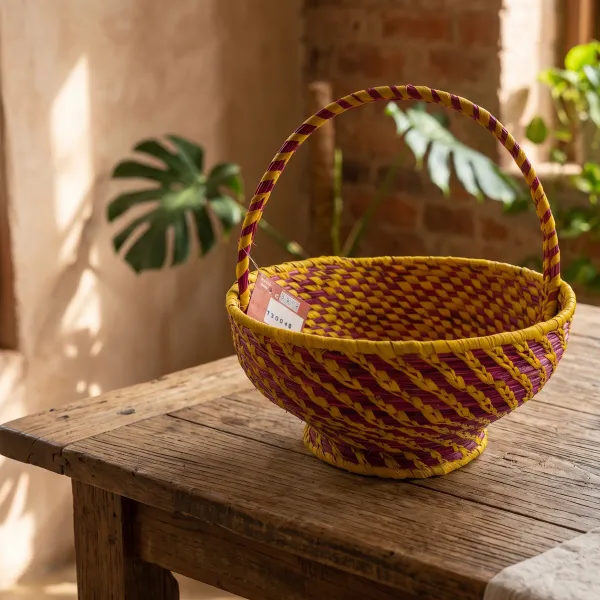
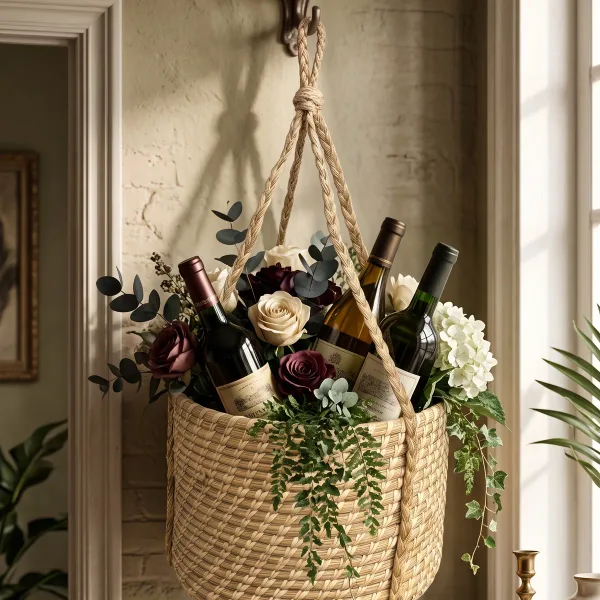
We make Sabai baskets to be gifted full and kept afterwards. A lidded basket holds a hamper and then lives on a shelf. A basket with a tall handle carries it to the recipient. A hanging basket can hold a plant. Browse all of them under Packaging Essentials.
Looking after a Sabai basket
- Wipe it dry with a cloth; do not soak it.
- Keep it away from standing water.
- Use a liner if you want to put plants or damp things in it.
Read next
-
Sohrai–Khovar: wall art for the harvest, now on your desk
Sohrai–Khovar began as wall painting by women of the Hazaribagh region to welcome the harvest. It is GI-registered, and now it decorates a journal and a desk mat.
By Elki Admin ·
-
Corporate gifts in India that people actually keep
A practical guide to choosing corporate gifts your team and clients will use: what to pick, how to add your logo and how long handcrafted orders take.
By Elki Admin ·